- Podcast
- /
- The role of engineered systems in simplifying complex fall protection decisions
The role of engineered systems in simplifying complex fall protection decisions
Watch and listen on
DESCRIPTION
In this episode of The Height Safety Standard Podcast by Guardian, Host Melissa Moss speaks with Don Thompson, the Vice President & General Manager of Engineered Services at Guardian, about designing permanent fall protection systems and improving safety at height. Don explains why asking the right questions is key to choosing the best system for each project and discusses common challenges such as system layout, attachment methods, and installation requirements. He also shares why involving fall protection experts early in the design process helps prevent safety gaps. The conversation explores industry trends, including the growing use of guardrail systems, and ends with Don's advice for new professionals on learning from workers in the field and thinking creatively to improve safety.
Don Thompson explains how choosing the right fall protection system starts with understanding the work being done, the job site, and the needs of the workers. He shares the most common challenges in engineered systems, including system layout, attachment methods, and making installation simple without reducing safety. Don also discusses why involving fall protection experts early in the design process helps avoid costly mistakes and improves worker protection. The conversation explores growing industry trends such as permanent guardrail systems and better facade maintenance planning. The episode concludes with practical advice for new professionals on asking questions, learning from workers in the field, and finding creative ways to improve height safety.
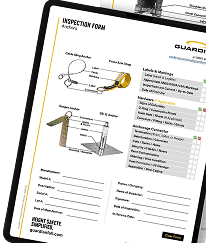
Free Download
Fall Protection Pre-Inspection Checklist!
Help your team catch hazards before work begins.
Host - Mel Moss
Director of Marketing at Guardian
Don Thompson
Vice President & General Manager of Engineered Services
Transcript
Don Thompson (00:00): This is what I always picture in my mind when somebody comes to us and they want a system. Our goal is to protect the workers using the best products, implementing the best practises to improve their safety and their productivity.

AI Intro (00:12): Don Thompson, Vice President and General Manager of Engineered Services at Guardian, the man behind the scenes making sure the most complex engineering projects actually get delivered.

Melissa Moss (00:24): So you can have a lot of programmes that are technically compliant, but still may leave workers exposed. Where do you see those gaps most often and what does it take to close those gaps?

Don Thompson (00:33): Facade maintenance systems are probably where we see the biggest issues where they're putting anchors every 20 foot across the rooftop. You need two anchors within 30 degrees of each other.

Melissa Moss (00:43): So every project obviously comes with its challenges. What obstacles do you encounter most often in height safety and how do you address those when they come up?

Don Thompson (00:52): There's two primary questions that we ask. One is.

Melissa Moss (00:56): At first, designing fall protection for a building might seem straightforward, but when it comes down to weighing all the options, things get complicated quickly. Choosing the wrong system can lead to costly consequences, especially if you realise too late. I'm Mel Moss, Guardian's Director of Marketing, and this is the Height Safety Standard, your definitive playbook for safer, more effective work at height. Let's set a higher standard for safety starting now by engineering better systems. Welcome to the Height Safety Standard, where we ditch good enough and set a higher bar in height safety. Because when you take a 360 degree approach, the safe choice is the simple one. And that's our gold standard, height safety simplify. That standard is especially important for engineered systems where the decision made on paper determines whether workers are protected. Today's guest, Don Thompson, is VP and General Manager of Engineered Systems at Guardian.

Melissa Moss (01:56): He has over 15 years of experience designing custom fall protection systems so he knows better than anyone how to think through the choices that keep job sites safe. Welcome to the Height Safety Standard, Don. Let's set a higher standard for safety by getting the system right from the start. Don, you spent over 15 years designing custom fall protection systems. Tell us about that work and what drew you to the engineering side of things.

Don Thompson (02:27): Yeah, so funny enough, I didn't go to school to go into engineering for fall protection. I don't think it was a major. I started in construction out of school, so I was in residential construction with a large home builder in Northern Ohio for the first three years out of school, mostly estimating at that point in time, a little bit of project management, and happened to move to Columbus 2009 and connected with Guardian at the time. And the engineering division was really just kind of a though at that time. We knew that there was potential there. I was starting to learn more about fall protection and just kind of jumped in and took it and ran with it from there. There was myself and a couple other people at Guardian at the time on the engineering side, and we saw the potential. I think my construction background really helped.

Don Thompson (03:16): Most of what we're dealing with is new construction. I would say the 90% plus of what we did is new construction. So that's where my background really helped me get started. Beginning to understand the engineering side of things and what all goes into it there, working with engineers on projects, whether it was internal or external engineering resources. Spent a lot of time out in the field testing inspections, understanding the products. So I did that for two or three years. I've travelled to literally every state in the country. I've been to every state at least woman. Like I said, there was a handful of us in the group that had either engineering background or construction background, and we saw the opportunities in the market, in the industry for permit fall protection systems, and we just took it from there.Like I said, I've personally done about every job in the division, estimating a little bit of project management, not much there, but onsite testing, inspection, sales, and have seen everything out in the field over the years, I feel like, even though there's something new that pops up all the time.

Don Thompson (04:15): But yeah, started from scratch and we've built it up to where it's at, and there's still two or three of the people that started at roughly the same time that I did that are still with the division. We've seen it blossom into what it is and excited to see where we can go in the future and where the industry's going.

Melissa Moss (04:30): That is awesome, Don. Thank you. So let's start with the big picture. When you hear height safety excellence, what does that mean to

Don Thompson (04:37): You?That means a lot, but I think the biggest, this is kind of what I always picture in my mind when somebody comes to us and they want a system, is our goal is to protect the workers, whether they're construction workers, general industry workers, maintenance workers, protect them and implement a system using the best products, implementing the best practises, whatever they're doing in the field to improve their safety and their productivity. Every time I talk to a customer first time, it's our goal to protect workers to implement the best practises, the best products that we possibly can to improve the safety and ultimately the productivity of the workers out in the field. So that's what we think of all the time, and you'll probably hear it a few times as we're talking, but I always say ask questions, understand what's going on, and learn from every person you're working with because everybody's got a different situation.

Don Thompson (05:27): And if you can do that, I think that that's excellence in my definition.

Melissa Moss (05:32): Yeah, it is important to ask questions too, especially when working at height. There's certified installers requirements that can add both time and cost to all those projects. And I'm sure it's a common question for you. When is a certified installer truly required and when can that work be completed without one?

Don Thompson (05:50): That's a great question. It's a question we get all the time. The term certified installer in my mind is, it's kind of a generic term, and I think every manufacturer has their own definition of what that is. Certain manufacturers, they're going to say, "Hey, these are the five or six companies that it can instal our systems and nobody else can touch them." In certain instances, having somebody with a lot of experience makes sense, distract from that. But most of our products, most of our systems, whether they're single anchor points, lifeline systems, we design them so they can be installed by really anybody in the field. Single point anchors, we go through and we do custom details, custom attachment methods. The products themselves, if you look at our stamp drawings, are going to show a detail that's a common construction practise, a use of a epoxy anchor, mechanical concrete connections, cast in place, weld-ons.

Don Thompson (06:39): There are people on every job site that have the ability to do that and often have a lot more experience than somebody who's been trained specifically on fall protection. Now there is a certain part of that instal where I think it makes sense to have somebody with a lot of experience in the field. We offer the ability to do that if needed on some systems like our pass-through lifeline systems. There's definitely a need to have somebody with knowledge of those systems. We make that as easy as we can. We can either send one of our techs on site training, and there's multiple ways we can accomplish that training, make sure they have all the right tools, and then whoever's doing it is trained on it. But like I said, it's our goal to make it as easy as possible. We have a group of people that handle our instals if needed, but the vast majority of the work we're doing is done by your roofer, your framer, your concrete contractor on site.

Don Thompson (07:25): And it's our goal to make it easy. If they want an extra guarantee, somebody with more experience on site, then we can get one of our techs on site and do a final inspection and sign off. Everybody, I think, like I said, in the industry has a little bit different route to market with that, and we just try to make it as easy and as simple as possible for everybody out in the field.

Melissa Moss (07:43): Nice. So every project obviously comes with its challenges. In your experience, what obstacles do you encounter most often in height safety, and how do you address those when they come up?

Don Thompson (07:53): Every project, whether it's simple fall arrest, single point anchor system, a horizontal lifeline system, a facade maintenance system, overhead rail, there's two primary questions that we ask. One is what's the layout going to be? And that's where it goes back to asking questions and trying to determine what kind of work is being done. So they'll make sure we're designing a system that allows them to do that work easily and safely. So the layout's number one, and right there with that is figuring out the attachment. A lot of structures, especially existing construction or existing structures, limited information on what's there. So I think that's probably our biggest obstacle is figuring out what that attachment is going to be, how we're going to attach that anchor, that lifeline, that rail system, whatever it is to the structure. New construction, that's where a lot of our customization comes in.

Don Thompson (08:43): We look at what's there. We can design pretty quickly knowing exactly what the size of the beam is, what the structure itself can support, and we can take that and run with it. Existing buildings, that's a little bit of a different scenario. Maybe you have to get in somebody on site, get outside engineering involved, I would say is the biggest obstacle. And it goes back to asking questions. I talk to our guys out in the field all the time, ask questions when you're there, determine as much information as humanly possible to allow us to design a system that's not only safe, but makes it easy to use. And getting that information is difficult at times. This relies on a lot of experience.

Melissa Moss (09:18): Sure. Yeah. And there's obviously more than one way to protect someone when they're at height. How do you help customers find that proper system and what information helps you make that call?

Don Thompson (09:28): I mean, there's always a discussion with a lot of variables that come into play. I said you can get the base model Chevy or you can get the Escalade and there's everything in between if you want to look at it like that. Determining how often something's being used, what's being done. There's always a budget question that comes into it as well. You don't want to talk to somebody about $100,000 system when they've only got $10,000 in your budget. So sometimes like it or not, you have to work backwards from there. But I would say the first questions that we ask is what's going on, understanding fall clearances, activities being done, if there's any existing systems that they've used before that they liked or didn't like for certain reasons, and taking it from there. So lots of questions. And then we start going into the advantages of certain products, what the advantages of lifelines are, what the advantages of single point anchors are, rail systems, all that.

Don Thompson (10:24): And sometimes a scenario can limit you to one or two of those options, and sometimes every one of them is available.

Melissa Moss (10:31): So you're usually brought in, I would hope, during the design phase before anything is built. And what are some of the biggest mistakes you see with teams at that stage?

Don Thompson (10:39): We see a lot of systems that are designed, whether it's by architects, sometimes engineering ferns, where there isn't sufficient coverage for systems. Swing falls, lots of times are missed in the corners of buildings. Fall clearance calculations aren't done correctly where lifeline systems that require, let's say 15 to 18 foot of fall clearance are put right on the edge of a building, be 12 foot high. And that's very common. They said not taking into consideration maintenance activities are done in the corner of a building and the lifeline, if you were to work at the corner of the building, you've got 10 to 15 foot of swing fall. And that's why I would say the vast majority of the companies we work with now, whether it's architects, engineers, they come to us first and they say, "Hey, can you help me with layouts? Can you help me with possible attachment methods?" And at least get our input initially.

Don Thompson (11:28): Not uncommon for them to make tweaks to what we do, but I think most of the firms out there now have come to the realisation it makes sense to come to whether it's us or somebody else with knowledge of the systems first to help them guide them through it.Because it's something, like I said, we do all day every day.

Melissa Moss (11:41): So you can have a lot of programmes that are technically compliant, but still may leave workers explode. Where do you see those gaps most often and what does it take to close those gaps?

Don Thompson (11:51): Probably system design, designing systems that aren't meant for the practise at hand. Facade maintenance systems are probably where we see the biggest issues where they're putting anchors every 20 foot across the rooftop. But when you're suspending and you need two anchors within 30 degrees of each other, for example, or 15 degrees, you really have to understand that those are the standards and there's a reason for that within those standards. Design the system there and it comes down to us giving the customers the knowledge they need. Here's what the standards say, and here's why they're doing it so you don't have somebody suspending from a line that's 40 degrees off of the anchor, which is almost impossible to do. Making sure they have access to the entire building, understanding what's going on, and then making sure that access is correct, that they're using for facade maintenance systems, that dab and arms are used at certain heights, that we're not using Bowson's chairs set up on buildings that are too high or whatever it may be.

Don Thompson (12:49): Taking all that into consideration and just making sure that the system they've got is going to serve them in the end.

Melissa Moss (12:53): So with engineered systems, where are they headed and what are you excited about in the future for them?

Don Thompson (13:00): It feels like the industry changes a little bit every year as to what direction they're going or we're going as a whole. There's definitely been, I would say over the last two to three years, a trend towards more guardrail systems. And I think we're starting to see a lot of the ballasted or weighted guardrail systems being implemented more as permit systems on rooftops for existing buildings, especially just because of their ease of use, the requirements to instal them. You don't have to open up your rooftop to connect to the structure there. The training required to use them is very minimal, if anything at all. And you're starting to see some new standards come to light because of that more in the works. And there's going to be some design requirements I feel like over the next few years on those weighted systems where it's not as much of just an off-the-shelf product.

Don Thompson (13:49): People want to make sure that what's getting installed is done correctly and is going to last them for years. I think that's probably the biggest change. We are seeing on the facade maintenance side of things likely as a result of the new OSHA standards that were implemented back in 2017 for RDS systems. A lot more of those designed in the structures that weren't before. I think that trend's been going on for three or four years, and I see that continuing as well where if I look back to when we started in 2010, 2012, two or 3% of buildings had a system on their roofs. It's probably closer to 10 to 15% now. So not only is construction increasing, the usage of our systems has increased as well.

Melissa Moss (14:29): Well, you've had a very good accomplished career. What would you tell someone just starting out in the engineered systems today?

Don Thompson (14:35): Yes, I said it before, but ask questions. Understand. I mean, if I was to come in day one and whatever the background was beforehand, get out there, work with end users in the field, understand what fall protection scenarios they're running into on a daily basis and work from there. Help develop products that serve the needs that are out there that haven't been touched on before. There's tonnes of them. I see it all the time. And I think the biggest issue we have in the industry is a lack of people that are out in the field seeing what's going on and coming up with solutions. Everybody's, to a certain extent, copying systems and doing this and doing that, and there's not a lot of difference between products. The services that we provide, I think offer a difference there, but understanding what's out there and thinking outside the box.

Don Thompson (15:23): So if you're new, get out there, learn from the people in the field, get the basics, and then just be creative from there.

Melissa Moss (15:30): Thanks so much for joining us, Don. If listeners want to learn more about Guardian Engineered Systems or get in touch with your team, where can they find more information?

Don Thompson (15:38): Best place to go would be guardianfall.com, engineered systems on the top bar. And then you can click on all the links there, contact my team, see some of our products on there, and that's a limited view of what products we have. Like I said before, a lot of what we do is customise three, 400 different anchor designs over the last 12 months. So just keep that in mind. If you've got questions, reach out and talk to one of us and we'll do what we can to help you out.

AI Intro (16:03): Awesome.

Melissa Moss (16:05): That's a wrap for today's conversation. Thank you so much for tuning into Height Safety Standard where we're ditching good enough and setting a higher bar in height safety. Because when you take a 360 degree approach, the safe choice is the simple one. If you want to explore more ways to set a new height safety standard, visit guardianfall.com to explore our compliance resources, training programmes, and digital tools, including Gabby, your twenty four seven AI Height Safety Assistant. Or visit guardianfall.com/podcast to explore more episodes and get our fall protection inspection checklist. Let's set a higher standard for height safety starting now.